There is an exact moment every evening in the Sacred Valley when everything begins to slow down. The last light disappears from the mountain peaks, the villages become quiet and, almost without noticing, your attention shifts upwards. During the day, most visitors are looking at the mountains. After dark, however, the landscape becomes the setting for something completely different and unique
It’s easy to understand why Peru has become known for its mountains, archaeological sites and trekking routes. Far fewer people realize that it is also one of the most rewarding places in South America for night photography. High altitude, exceptionally dark skies and long dry seasons create ideal conditions for photographing the stars, yet much of the country remains largely unexplored by photographers once the sun goes down.
That became even more obvious during a recent photography trip through the Sacred Valley with landscape photographer Marcin Bobruk. Instead of rushing from one famous viewpoint to another, the trip was built around the night sky itself. Every afternoon became a decision about weather, moonlight and cloud cover. Every evening started long before the first stars appeared. That is probably the biggest misconception about Peru astrophotography. The photographs may be taken in darkness, but the planning begins hours earlier.
Sacred Valley stargazing is one of the best places to stargaze in Peru !
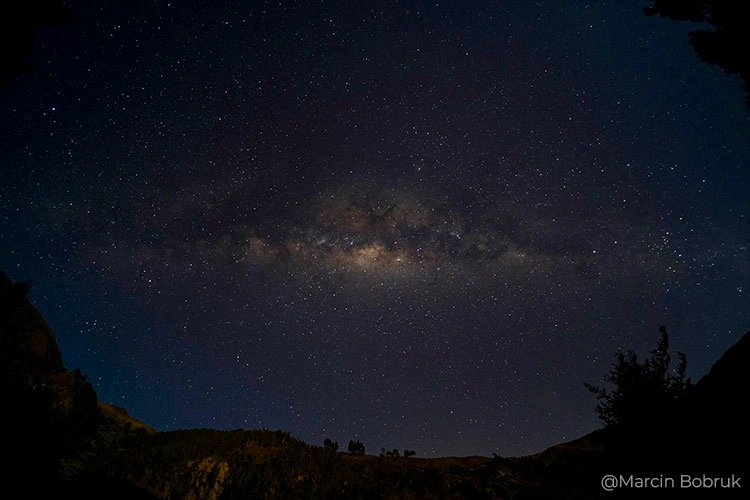
Most travellers know the Sacred Valley as a place of colourful markets, Inca terraces and traditional villages. By late afternoon, many day visitors have already returned to Cusco, leaving the valley noticeably quieter.
Once darkness arrives, another landscape begins to appear.
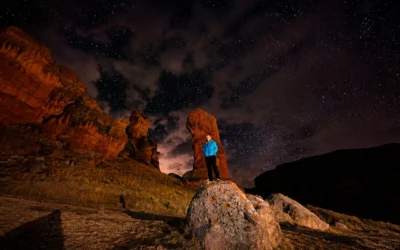
The mountains that dominate every daytime photograph become silhouettes against the horizon. Small villages glow softly in the distance, while above them thousands of stars gradually emerge across an almost impossibly clear sky. There is no sudden switch from day to night. It happens slowly, giving photographers time to adjust their compositions while the last traces of blue disappear from the western horizon.
This is one of the reasons Sacred Valley stargazing feels so different from photographing the sky close to a city. The darkness isn’t absolute. Instead, it exists in balance with the surrounding landscape, allowing mountains, ancient terraces and distant peaks to become part of the image rather than simply disappearing into shadow.
What Are The Best astrophotography locations in Peru?
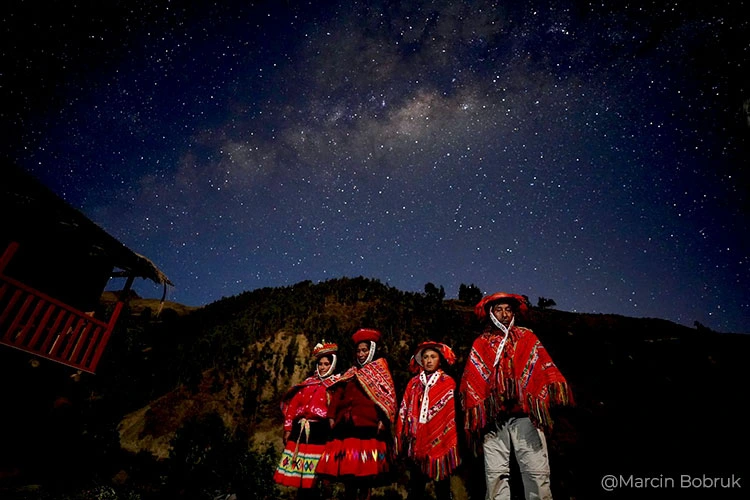
Photographers often talk about Iceland, Patagonia or the Atacama Desert when discussing night skies. Peru is mentioned far less frequently, which is surprising considering the conditions it offers. Altitude plays a huge role. Much of the Sacred Valley sits between 2,800 and 3,500 metres above sea level. The air is thinner, humidity is generally lower during the dry season and, away from larger towns, artificial light remains surprisingly limited. Those conditions create exceptional visibility when the weather cooperates.
Unlike destinations where photographers concentrate on a single location, Peru offers remarkable variety. Ancient ruins, glacial peaks, high-altitude lakes, colonial churches and traditional Andean communities all provide completely different foregrounds beneath the same sky. It is that diversity which makes many photographers describe Peru as one of the best astrophotography locations in Peru, even if it still remains relatively unknown internationally.
Night sky photography Peru – Following the Milky Way Across the Valley
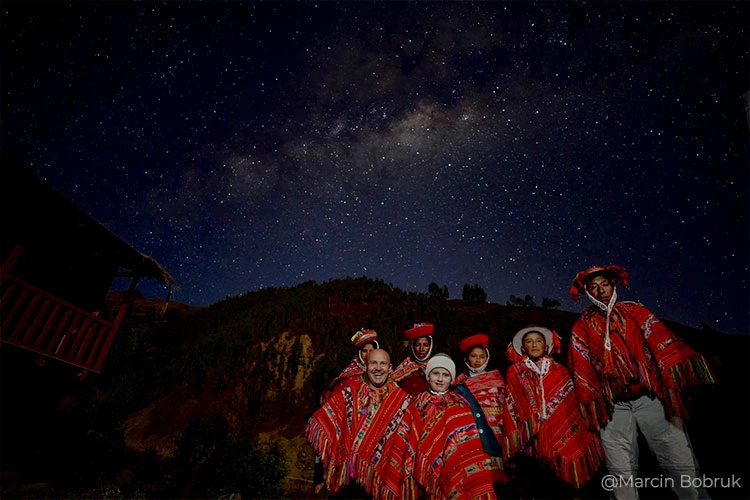
One of the most rewarding parts of photographing the Sacred Valley is that no two nights are ever exactly the same. Clouds build over one mountain while another remains perfectly clear. Frost settles across the grasslands before midnight. A valley that appeared calm during the afternoon suddenly fills with mist after sunset. During our time with Marcin Bobruk, every evening involved adapting to those conditions rather than following a fixed plan. Sometimes we stayed close to Ollantaytambo. On other nights we travelled further into quieter communities where artificial light almost disappeared completely. Patience quickly became more important than equipment.
Many people imagine Milky Way Peru photography as arriving at one viewpoint, setting up a tripod and waiting. In reality, much of the work happens beforehand. Walking locations during daylight, identifying foregrounds, checking the direction of moonrise and understanding how the mountains will frame the galactic core all make a significant difference once darkness arrives.
The Landscape Matters Just As Much As The Sky For Astrophotography Peru
Good astrophotography is rarely just about stars. One thing that became obvious throughout the trip was how strongly the surrounding landscape influenced every composition. The Sacred Valley offers something many dark-sky destinations cannot. It gives photographers foregrounds with history.
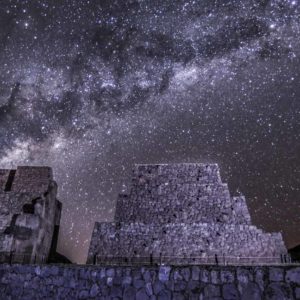
Ancient agricultural terraces follow the contours of the mountains. Narrow stone paths disappear into the darkness. Snow-covered peaks catch the final traces of moonlight long after the valley floor has become black.
Those details create depth that simply doesn’t exist when photographing an empty horizon.
For anyone interested in Milky Way photography Peru, the relationship between the land and the sky becomes every bit as important as the stars themselves.
Local Knowledge Changes Everything About The Milky Way Peru
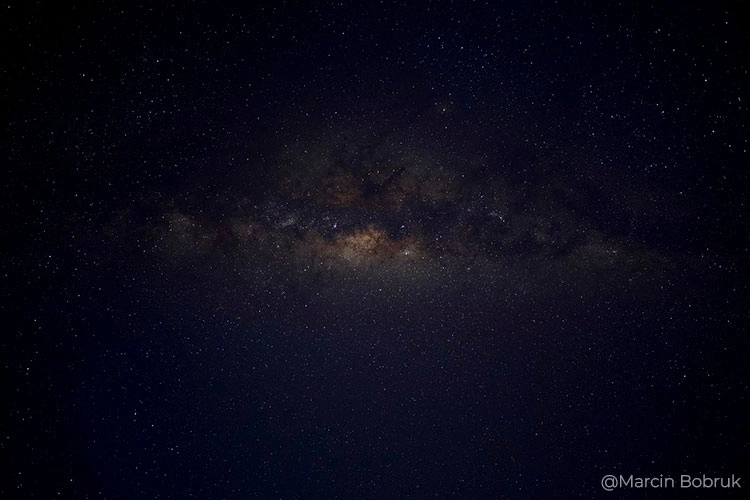
Knowing where to photograph is only part of the process. Knowing when not to photograph can be just as valuable. Weather in the Andes changes quickly, particularly during the transition seasons. A forecast that looks perfect during breakfast may be completely different by sunset. Local knowledge becomes less about reading weather apps and more about recognizing patterns that repeat throughout the year. Some valleys tend to hold cloud after rainfall. Certain ridges remain exposed to strong winds long after neighbouring areas become calm. Even small changes in elevation can completely alter visibility during the evening. These are details that only become familiar after spending countless nights in the mountains. That experience shaped almost every decision throughout the week.
A Week in the Sacred Valley with Marcin Bobruk Doing Peru Night Photography
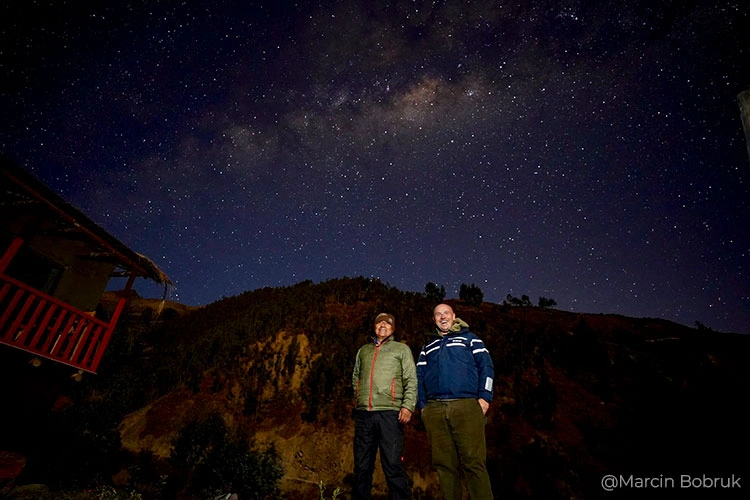
Every astrophotography trip is different. You can plan locations months in advance, study moon phases, check weather forecasts and map out exactly where the Milky Way will appear, but the mountains always have the final say. That was certainly the case during our recent week in the Sacred Valley with landscape photographer Marcin Bobruk. Rather than following a rigid itinerary, each evening evolved around the conditions we found on the ground. Some afternoons looked perfect, only for clouds to build unexpectedly as the sun disappeared behind the mountains. On other nights, forecasts that seemed unpromising gradually cleared, revealing skies that stayed crystal clear until dawn. That flexibility is one of the reasons Peru astrophotography is so rewarding. Success isn’t about standing in one famous location waiting for the stars to appear. It’s about understanding the landscape, knowing when to wait and recognizing when it’s worth driving a little further in search of clearer skies.
Throughout the week, we explored several areas across the Sacred Valley, each offering something completely different once darkness arrived. Some locations framed the Milky Way above ancient agricultural terraces, while others opened onto wide mountain valleys where the stars stretched uninterrupted from one horizon to the other. Every evening brought a different composition, reminding us that no two nights in the Andes are ever quite the same. For Marcin, the landscape itself was just as important as the sky. The goal wasn’t simply to capture the Milky Way Peru is becoming known for, but to create photographs that could only have been taken here. Snow-covered peaks, centuries-old stone walls, quiet Andean villages and the distinctive contours of the Sacred Valley all became part of the final image, giving each photograph a real sense of place.
One of the biggest surprises was how quickly conditions could change over relatively short distances. A valley covered by cloud could give way to perfectly clear skies just a few kilometres away. That local knowledge often makes the difference during Night sky photography Peru sessions. Knowing alternative viewpoints, understanding how weather behaves around different mountain ranges and being willing to adapt the plan as conditions evolve are all part of photographing the Andes after dark.
The trip also reinforced why the Sacred Valley continues to be one of the best places to stargaze in Peru. The combination of high altitude, remarkably low levels of light pollution and dramatic mountain scenery creates opportunities that are difficult to find elsewhere. Every location offered a different foreground, allowing us to move well beyond the classic Milky Way image and create compositions that reflected the character of the valley itself.
By the end of the week, we had photographed beneath completely different skies, from perfectly clear nights where the galactic core dominated the horizon to evenings where thin cloud added texture and atmosphere to the scene. It was a reminder that great Astrophotography Peru isn’t about chasing identical conditions every night. Sometimes the most memorable photographs come from adapting to whatever the mountains decide to offer.
Like so many trips through Peru, the experience became less about following a schedule and more about working with the earth. The stars may have been the reason we travelled, but it was the Sacred Valley itself that gave every photograph we took, its story.
Frequently Asked Questions About Peru Astrophotography
When is the best time for Peru astrophotography?
This has to be the dry season, which runs from May to September. This time of the year offers the most reliable conditions for photographing the night sky. During these months, clearer skies and lower humidity increase the chances of capturing the Milky Way without cloud cover.
That doesn’t mean the shoulder seasons should be ignored. April and October can produce exceptional conditions, often with greener landscapes after the rains and fewer visitors throughout the Sacred Valley. Every year is slightly different, which is why flexibility is often more valuable than choosing a single “perfect” date.
Is the Sacred Valley the best place for stargazing in Peru?
For many photographers, yes. There are darker locations elsewhere in the country, but few combine accessibility, altitude and dramatic scenery as successfully as the Sacred Valley. Being able to photograph the Milky Way above ancient terraces, traditional villages and snow-covered peaks creates images that immediately feel connected to Peru rather than simply being photographs of the night sky.
That combination is why Sacred Valley stargazing has become increasingly popular with photographers looking for something beyond the classic tourist experience.
What are the best places to stargaze in Peru?
The Sacred Valley is certainly one of the best places to Stargaze in Peru, but it is far from the only option. The Ausangate region offers some of the darkest skies in the Andes, while the high plateaus around Lake Titicaca provide enormous open horizons. Colca Canyon also rewards photographers willing to spend a few nights away from the larger towns.
Each destination has its own individual character. Some are better for dramatic mountain compositions, while others offer wide skies with very little artificial light. Choosing among the best places to stargaze in Peru really does depend on the type of photos you want to take, not just looking for the darkest location to photograph the night sky.
Do I need professional equipment for Milky Way photography in Peru?
Not really. Modern mirrorless cameras do remarkably well in low light, and even beginners can achieve impressive results with a sturdy tripod and a fast wide-angle lens. Good planning usually has a better impact than expensive equipment. Understanding moon phases, checking weather conditions and arriving at your location before sunset will often improve your photographs more than upgrading your camera.
This is one of the reasons Milky Way photography Peru appeals to photographers at every level.
Why is altitude important for night sky photography in Peru?
High elevation generally mean thinner, drier air, and the fact you are actually closer to the sky! This really does improve visibility on the most clear nights.
At the same time, altitude introduces its own challenges. Temperatures drop quickly after sunset, batteries lose power faster and even short walks carrying camera equipment can feel more demanding if you haven’t fully acclimatized. Allowing a couple of days to adjust to the altitude before beginning longer photography sessions usually makes the experience far more enjoyable.
Is Peru night photography only about photographing the Milky Way?
Not at all! While the Milky Way naturally attracts the most attention, there are plenty of other opportunities once darkness falls. Moonlit mountain landscapes, reflections on high-altitude lakes, star trails above archaeological sites and traditional villages illuminated by a handful of lights all create completely different styles of photography.
Some of the strongest images aren’t taken on moonless nights at all. A rising moon can reveal textures across the mountains that disappear in complete darkness, giving photographers a very different way of interpreting the landscape. That’s what makes Peru night photography so rewarding. Every night offers something slightly different.
Can beginners enjoy an Astrophotography Peru tour?
Absolutely. Many people assume astrophotography requires years of experience, but the biggest learning curve usually comes from understanding the camera rather than understanding the sky.
Travelling with experienced photographers also makes a noticeable difference. Small adjustments to camera settings, composition and focusing techniques can dramatically improve your results without making the process feel complicated. The idea isn’t simply to return home with technically perfect photographs. It’s to enjoy the experience of working beneath some of the clearest skies in the Andes.
What makes the Sacred Valley different from photographing near Cusco?
Although Cusco sits at a similar altitude, the city naturally produces much more light pollution. The Sacred Valley offers greater flexibility. Within a relatively short drive you can reach quiet communities and open landscapes where light pollution drops away, allowing the stars to dominate the sky once again. For photographers, that balance between accessibility and darkness is difficult to find elsewhere.
Can I combine astrophotography with other tours in Peru?
Definitely! Many photographers choose to add a few nights of Night sky photography Peru before or after visiting Machu Picchu, the Sacred Valley or the Salkantay region. Others combine it with longer trekking itineraries, particularly in areas like Ausangate, where the night skies can be just as memorable as the mountain scenery itself.
The advantage of travelling this way is that you experience Peru in two completely different lights. During the day, you’re exploring the country’s landscapes and culture. After sunset, those same places reveal an entirely different character.
Why is local knowledge so important for Peru astrophotography?
Photography apps can tell you where the Milky Way will appear, but they can’t tell you how a particular valley behaves after sunset or which mountain ridge is likely to collect cloud first.
That’s where local experience becomes invaluable. Understanding seasonal weather patterns, recognizing the best viewpoints and knowing when to adapt plans often makes the difference between spending the evening waiting beneath cloud and finding clear skies just a few kilometres away. Like much of travel in Peru, successful astrophotography isn’t about following a rigid plan. It’s about working with the landscape rather than expecting the landscape to work around you.