
There is something incredibly magical about this section of paradise, where the Andes give way to the jungle region near Cusco. A magical place where mist envelops ancient trees and rivers carry with them the unique sounds of the Amazon. The Cusco jungle region is one of Peru’s last wild frontiers, brimming with mega diversity and rich cultural uniqueness. This unique region of Peru is where the high Andean mountains give way to cloud and mist, to orchids and rushing rivers. This is the threshold between two very different Peruvian worlds! The Cusco jungle region, is one of Peru’s most diverse and least understood regions. Here, in places like Quillabamba, Madre de Dios, Tambopata, Manu National Park, and the lower cloud forests that lead down toward the Amazon basin, the magnificent landscapes hum with life. To travel in this part of Peru is to feel a very definite shift. The pace of life slows right down, the air thickens, and the sounds of birds, insects, dramatic weather and the rustle of leaves take front stage. Reminding us us that we are just minute, insignificant guests of a vast living ecosystem.
Recently, Domingo, the founder of Kallpa Travel, had the opportunity to visit Costa Rica through an international sustainability program hosted by Promperu and ICT, this was designed to explore how responsible travel can be applied in the different regions of Peru. He came back completely inspired, by tales of how Costa Rica has built an ecological and sustainable tourism model, founded by environmental protection and community empowerment and development. A country where travellers become important partners in the conservation of these fragile Peruvian ecosystems. As he spoke about what he had experienced, I realized exactly how deeply those lessons resonate here in our own glorious Peruvian backyard.
A Shared Vision Across Different Rainforests
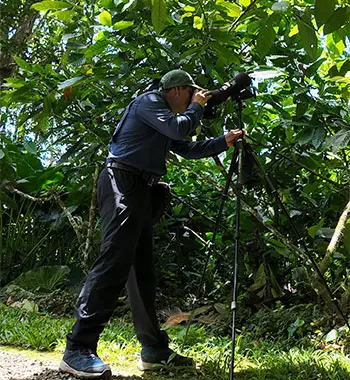
Costa Rica’s excellent reputation for sustainable travel is incredibly well-deserved. Over 25% of the country’s land is protected national park, and tourism is carefully managed to preserve natural habitats and eco systems, while supporting local livelihoods. Ecolodges, family-run nature reserves, and indigenous community projects have demonstrated that tourism, when designed responsibly, can regenerate communities and not deplete them.
In the jungle regions around Cusco, we see the same potential for responsible tourism. While many visitors visit Cusco for Inti Raymi, Machu Picchu and the Sacred Valley, few venture far
enough to discover the lush lowlands of the rainforest beyond the mountains. Yet here, among cacao trees, coffee farms, and cloud forests lie communities that have lived sustainably for generations. Protecting forests is an integral part of everyday life not a business strategy.
What Costa Rica demonstrates is that protecting nature is not an obstacle to business development in these jungle regions, it is an important part of sustainable business practice, and this hold true for the jungle regions of Cusco.
The Jungle Is Our Teacher!
One of the most incredible aspects of the Cusco jungle region is how local communities, culture and ecology all intermingle. Local Quechua-speaking families have practiced agroforestry for a long time, which involves growing fruit trees, coffee, and cacao under the shade of native rainforests and cloud forests. These families and small communities developed techniques that help sustain soil health, conserve water, and maintain Peru´s impressive biodiversity. These sustainable practices rarely receive any recognition within Peru´s mainstream tourism trade. Usually, travelers pass through these regions quickly, missing the wisdom that the jungle holds.
At Kallpa Travel, inspired by Domingo’s experiences in Costa Rica, we are working hard to change this perception. We are helping to build new community partnerships that allow visitors to learn directly from local farmers, naturalists, and artisans, whose life philosophy is to live in harmony with the land. Imagine walking along a rainforest trail led by a local guide who explains how medicinal plants are collected with respect. Or even visiting a small organic “finca” where the owners invite you to a delicious meal made from ingredients grown just in their natural jungle garden. These are not staged touristic experiences for visitors, they are everyday life encounters based on cultural immersion, respect and reciprocity.
A Lesson Learned from Costa Rica
In Costa Rica, Domingo experienced a country where sustainability isn’t an afterthought, it’s actually the foundation of responsible tourism. Ecolodges are built with renewable materials, powered by solar energy, are water conscious and managed by local families who reinvest their profits in reforestation or educational projects. Even adventure tourism such as canopy tours, kayaking, and wildlife observation, for example, which follow strict environmental guidelines. This model works because it follows a completely holistic approach that values people as much as the destination. Every guide, farmer, artisan and community member become part of a living network of ownership.
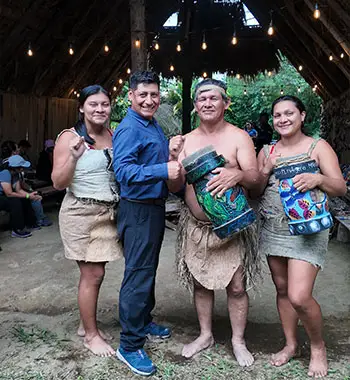
As Domingo recounts stories of his Costa Rican rainforest adventure, I couldn’t help thinking about how these ideas could enhance and enrich the Cusco jungle travel experience. The foundations already exist in community pride, ancestral knowledge, environmental protection and extraordinary biodiversity. The only thing we actually need are better connections and education. With things like better access, training programmes, allegiances and partnerships that empower local people to take direct ownership of tourism in their regions. This is what responsible travel truly means. A shared journey where everyone benefits, including the rainforests, themselves.
Small Steps For Bigger Impact
- Here, at Kallpa Travel, we have been introducing eco-conscious travel practices inspired by the examples we learned in Costa Rica. These include:
- Community-led jungle hikes that support local conservation projects.
- Plastic-free travel philosophy and using refillable water bottles.
- Partnerships with family-run accommodationss that reinvest in the environment.
- Cultural exchange tours that connect travelers with local schools and artisans.
- These steps may seem small, but they have a powerful ripple effect. When travelers choose responsible tourism in Cusco, they directly support the local people and ecosystems that might otherwise be struggling to survive
Seeing the Jungle in A Different Way
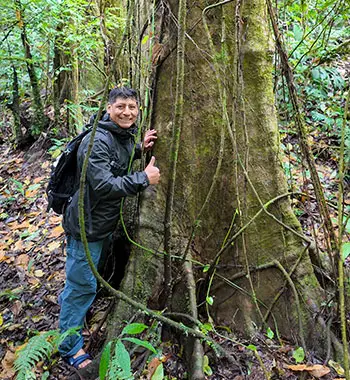
The jungle region around Cusco is often described as the gateway to the Amazon rainforest yet it’s actually so much more than this. It’s a living classroom, a spiritual sanctuary, and also a reminder that practicing sustainability on a daily basis. When I walk along the jungle trails of Tambopata or stand at the clay lick to see macaws feeding, it makes me think about how much this region has to teach us about regeneration. For example, trees regenerate after storms, communities adapt after hard times, and just like the rivers that flow from the Andes to the Amazon, everything in life is interconnected. What we have learned
from Costa Rica, demonstrates to us that tourism can use that natural connection instead of breaking it. Here in Peru, we have an excellent opportunity to do the same and we can make responsible travel not just a marketing term, but a living daily philosophy.
Why It Matters
For travelers to Peru, deciding to explore the Peruvian rainforest responsibly means a more meaningful visit to this wonderful region of Peru. You’re not only visiting a beautiful region, you are actually contributing to its survival. You’re helping a young guide build a sustainable livelihood, eco lodges continue their wonderful work, a local farmer maintain their crops, and the largest rainforest in the world to continue to breathe for many generations to come. This is what sustainable travel looks like when it’s done in the right way. A mutual exchange of knowledge, gratitude, hope and taking care of this amazingly fertile region. At Kallpa Travel, we believe that travel should transform both the visitor and the local communities, leaving a positive trail long after the footprints fade.
A Peru Trip That Gives Back
The jungle around Cusco may not have Costa Rica’s tourism infrastructure, at least not yet, but it has something even more deep and meaningful, which is true authenticity. It’s still wild, rugged, still honest, still waiting for travelers who are looking for immersion rather than a speed vacation experience. One thing is for sure, as we continue to learn from Costa Rica’s sustainable travel model, Kallpa Travel is committed to developing eco-travel experiences that protect what matters most, which is the incredible connection between human beings and nature. When you choose a trip with Kallpa Travel, you become part of that process. You will not just be seeing and experiencing the wonderful country of Peru, you will be directly helping to shape a more sustainable future for the country and its people.
Are you ready to explore the living heart of the Cusco jungle? Join us on a unique trip that respects nature, supports local communities, and redefines adventure travel in Peru. See first-hand how our responsible travel experiences in Peru help local communities and become part of a movement where each and every traveler makes a massive difference! Contact us here!