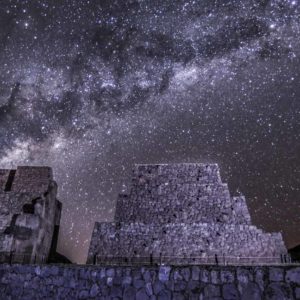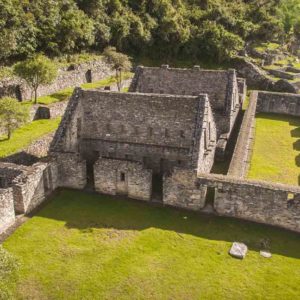
In Puno, Peru, these strange and mysterious forms of enormous proportions have been found, and can only be seen from planes or satellite images. The origin and its antiquity are unknown. Some images remind us of the “Eye of God”, the circular image found in Caral – Supe (3,000 BC) that shows the Illa Teqsi, the God of the Incas. The inner-circle represents “The eye of God”, and the concentric circumference symbolizes the “phenomenal reality”, in other words, the Universe, Kawsay Pacha or “Living Cosmos”. These images are located in terraces currently used as ridges by the Puno farmers.
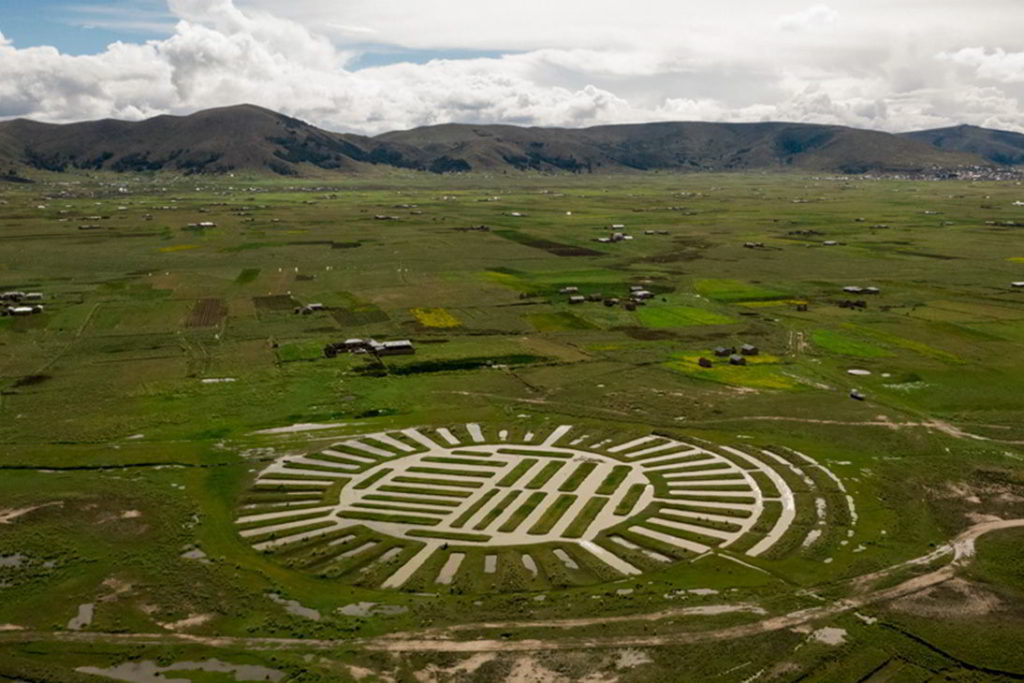
It is said that the so-called Camellones or Waru Waru was a powerful technology implanted since ancient times in the highlands of the Andes. Its primary purpose was to create a better cultivation environment in the cold temperatures of the highland nights.
The water surrounding the ridges where the yields were, allows the crops not to freeze every night when temperatures might drop down an average of 15 degrees.
During the day, the temperature rises due to the high plateau sun, and that water heated from sunrise to sunset emits enough heat at night, so nothing freezes in the meantime.
Suppose you are planning a trip to Peru or asking yourself where to travel in Southamerica. In that case, Waru Waru is for sure one of the best, unique and privileged places to go in Peru, contact us for more information.