On any other day of the year, Paucartambo is a small Andean town where life moves at a fairly ordinary pace. Farmers come and go from the surrounding countryside, people sit chatting in the main square, and not much really happens beyond the routines of daily life. Then July arrives.
If you happen to visit between the 15th and 18th of July, it can be difficult to believe you are standing in the same place. The roads leading into town fill with buses, trucks and taxis carrying dancers, musicians and families returning home for the celebrations. Brass bands rehearse in side streets. Food stalls appear almost overnight. By the time the Fiesta de la Virgen del Carmen begins, every corner of Paucartambo seems to be alive with music, colour and movement.
Why the Paucartambo Festival Is So Important
The Virgen del Carmen Paucartambo festival is often described as one of the most important cultural celebrations in Peru, but that description does not really capture what it feels like to be there. It is part religious festival, part cultural tradition and part family reunion. For many of the people who participate, it is also a lifelong commitment. Everything revolves around Mamacha Carmen. The Virgin is carried through the streets in a series of processions accompanied by dancers, musicians and thousands
of devotees. At times the atmosphere feels deeply spiritual.A few hours later it can feel more like a giant street party. One of the things that makes the Paucartambo Festival so fascinating is the way these different emotions exist side by side. Joy and sadness. Faith and humour. Celebration and remembrance.
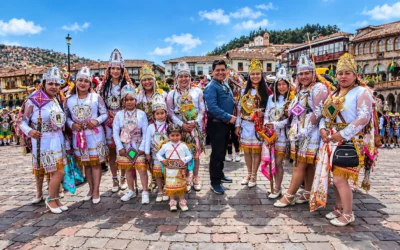
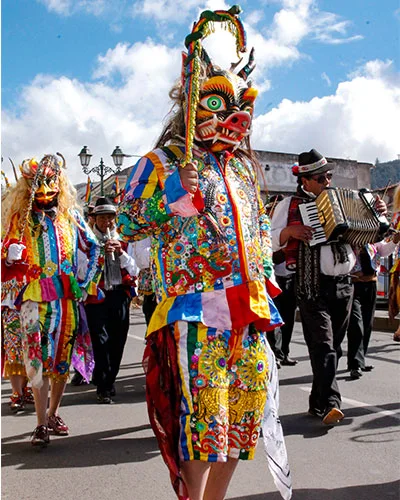
The festival itself reflects the complicated history of the Andes. Indigenous traditions blend with Catholic beliefs in ways that have developed over centuries. You see it in the dances, the costumes and even in the stories that the dancers perform throughout the festival. There are nineteen official dance groups, each representing a particular character, profession or social group. Some are historical figures. Others are parodies. Some are heroic. Others are mischievous, frightening or downright ridiculous.
The Dance Groups That Bring Virgen del Carmen Paucartambo to Life
The Qapaq Chunchos are perhaps the most respected of all. Representing warriors from the Amazon region, they are considered the protectors of the Virgin and play a central role throughout the celebrations. The Qapaq Qollas represent merchants from the highlands who travelled long distances with llamas carrying goods to trade. The Qapaq Negros recall the enslaved Africans who worked in the colonial mines and who developed a deep devotion to the Virgin.
Then there are the Saqras. No matter

how many photographs you have seen beforehand, nothing quite prepares you for watching them leap across rooftops and balconies overlooking the main square. Their elaborate masks, horns and exaggerated features make them look like something between a demon and a carnival character. Throughout the festival they attempt to tempt the Virgin, dancing from above while carefully avoiding facing her directly whenever she passes below.
The Maqt’as are impossible to ignore as well. Part clown, part troublemaker and part security guard, they spend most of the festival keeping the streets clear for the dancers. They are loved and feared in equal measure. If you happen to be standing where a dance group needs to pass, they will quickly encourage you to move. Their methods are not always gentle. Whips, practical jokes and complete chaos are all part of the job description.
Why you should Visit Festivals in Cusco Peru
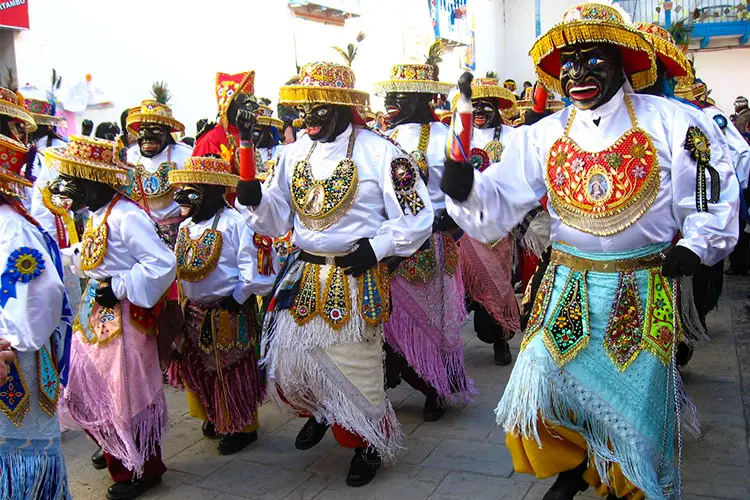
For visitors, this is often where the festival becomes so memorable. It is impossible to remain a passive observer for long. The music follows you through the streets. Dancers pull spectators into the celebrations. Beer appears from nowhere and somehow ends up in your hand. Before long, you find yourself following one dance group through town, only to become distracted by another performance taking place around the next corner. The festival continues day and night. One moment dancers are performing intricate choreographed routines in front of the church. A few hours later they are jumping through flames as part of symbolic cleansing rituals. At another point they make their way to the cemetery to pay tribute to members of their dance groups who have passed away. These visits are among the most moving moments of the entire celebration. Music fills the cemetery while dancers perform among the graves, honouring people who dedicated years of their lives to the festival.
This constant movement between celebration and remembrance is one of the things that makes the Virgen del Carmen Cusco celebrations feel so different from many other festivals. What visitors see over four days is really the result of an entire year’s work. Being accepted into a dance group is considered a huge honour. In some cases people wait years before being invited to join. Once accepted, dancers commit themselves not only to learning the choreography but also to maintaining traditions that have often been passed down through families for generations. Costumes are handmade and constantly improved. Rehearsals take place throughout the year. Fundraising events are organized to help cover the enormous costs involved in participating. For many dancers, returning to Paucartambo every July is not optional. It is a promise made to Mamacha Carmen. That promise is taken seriously. Many people who have moved away to Cusco, Lima or even overseas organize their entire year around returning for the festival. Work schedules are adjusted. Flights are booked months in advance. Family gatherings are planned around the dates. Missing the festival is something that many participants simply do not consider.
Why the Paucartambo Festival Is So Important
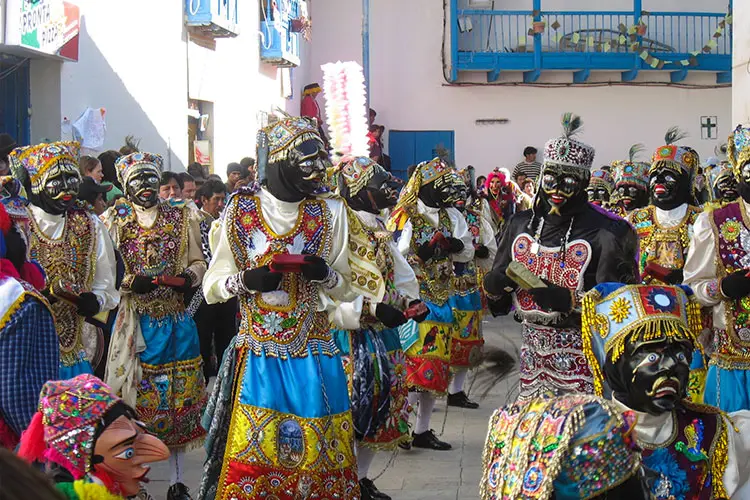
This devotion is one of the reasons the Festival of the Virgen del Carmen has remained so vibrant. It is not preserved because someone decided it was important for tourism. It survives because local people continue to invest enormous amounts of time, energy and emotion into keeping it alive. As the final day approaches, one of the most anticipated moments begins to unfold. The Qapaq Qollas attempt to take the Virgin away while the Qapaq Chunchos defend her. It is a symbolic battle that has become one of the defining rituals of the festival. The merchants fall one by one while the Saqras arrive with their dramatic cart of fire, ready to drag them away amid laughter, music and complete chaos. And then, almost as suddenly as it began, it ends. The bands stop playing. The crowds slowly disappear. Buses leave town carrying exhausted dancers back to their normal lives. The streets become quiet again. For visitors, it is the end of an unforgettable few days. For the people of Paucartambo Peru, preparations for next year begin almost immediately
FAQs About The Virgen del Carmen Festival Peru
When is the Virgen del Carmen festival celebrated in Paucartambo?
The Fiesta de la Virgen del Carmen takes place every year between the 15th and 18th of July. Although the festival itself lasts four days, preparations begin long before that. Dancers spend months rehearsing, costumes are repaired and redesigned, and families start making plans to return home. By the time the celebrations begin, the entire town has been preparing for months.
Why is the Q'eswachaka Bridge famous?
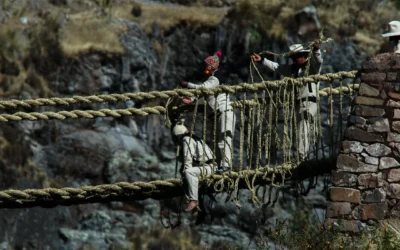
Peru has no shortage of impressive Inca sites, but Q’eswachaka is different. It isn’t famous because it is the biggest or most dramatic structure left behind by the Incas. It is famous because it is still alive. Every year local communities rebuild the last Inca rope bridge using techniques that have been passed down through generations. In a country where so much of the Inca legacy survives in stone, Q’eswachaka survives through people.
Why is the Virgen del Carmen Paucartambo festival so famous?
Peru has no shortage of festivals, but the Paucartambo festival is different. What makes it special is the combination of faith, tradition, music, dance and community involvement. This is not simply an event people come to watch. For many participants, it is a lifelong commitment. Entire families are involved, and many dancers return year after year because of promises they have made to Mamacha Carmen.
How far is Paucartambo from Cusco?
Paucartambo is found around three hours from Cusco by road, depending on traffic and weather conditions. The journey takes visitors through beautiful Andean landscapes and small rural communities before arriving in the town. During the festival, travel times can be longer because of the large number of people heading to the celebrations.
Who are the Saqras at the Paucartambo Festival?
The Saqras are one of the most recognizable characters in the festival. They represent mischievous demons who spend the celebrations trying to tempt the Virgin and the audience. What makes them unforgettable is that they often dance from rooftops, balconies and church towers overlooking the town. Despite their frightening masks, they are also among the most entertaining characters in the festival.
What are the most important dance groups in the Virgen del Carmen festival?
There are nineteen official dance groups, each with its own history and symbolism. The best known are the Qapaq Chunchos, who protect the Virgin, the Qapaq Qollas, who represent highland merchants, and the Qapaq Negros, who represent enslaved Africans brought to work in the colonial mines. Together, they form the heart of the celebrations and play a central role in many of the festival’s most important rituals.
Can tourists attend the Virgen del Carmen Paucartambo celebrations?
Absolutely. Visitors are welcome to experience the festival and many people consider it one of the most fascinating Andean cultural festivals. That said, it is important to remember that this is first and foremost a religious and community celebration. Respecting local traditions and understanding the significance of the event makes the experience much more meaningful. It also is one of the best places to see the traditional dances of Peru.
What happens during the final day of the Paucartambo Festival?
One of the most anticipated momentsof Paucartambo Peru is the symbolic battle between the Qapaq Qollas and the Qapaq Chunchos. According to tradition, the merchants attempt to take the Virgin away while the warriors defend her. It is dramatic, chaotic and often humorous, with the Saqras joining the action as the story unfolds. For many visitors, it is one of the highlights of the entire festival.
Is the Virgen del Carmen festival worth visiting?
Without question. If you are interested in Andean culture, traditional festivals in Peru and experiences that go far beyond the usual tourist attractions, it is hard to think of many celebrations that compare. The costumes, music, dances and devotion are extraordinary, but what stays with most people is the passion of the participants. You quickly realize this is not something performed just for visitors. It is integral part of people’s lives and one of the best Festivals in Cusco Peru.