Arriving at the Qoyllur Rit’i Festival Peru
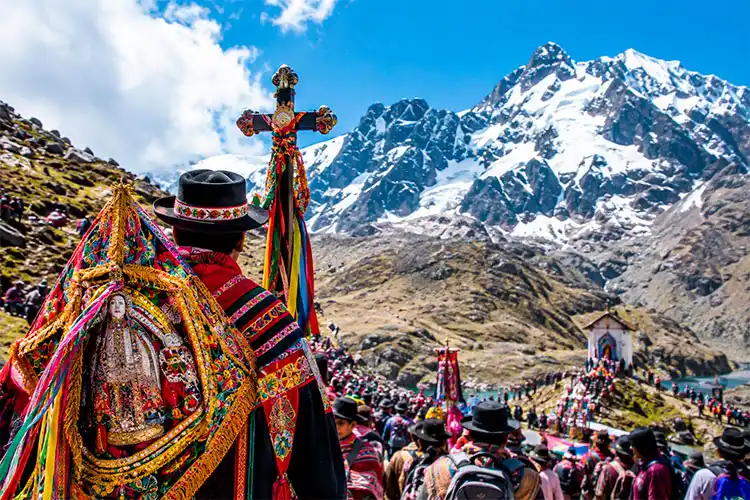
Most people associate Peru’s festivals with colourful costumes, dancing in town squares and plazas, and colonial churches overflowing with traditionalmusic. Qoyllur Rit’i is something completely different. Quite possibly the most unique festival on the planet!
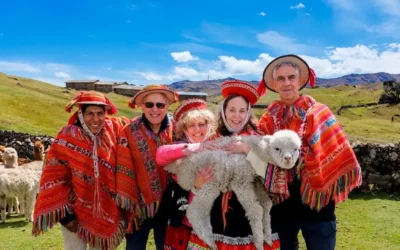
The first thing that strikes you is the location. There are no cobbled streets filled with spectators and there is no historic town acting as the backdrop to the celebration. Instead, thousands of people make their way into a remote mountain valley high in the Andes. Pilgrims arrive on foot, by bus, by truck and occasionally on horseback. Entire communities travel together carrying banners, instruments and supplies for the days ahead. The journey itself is a main part of the whole experience.
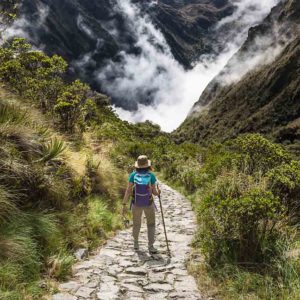
As you leave Cusco behind, the landscape gradually changes. Villages become smaller. The mountains become larger. Eventually the road reaches Mahuayani, the traditional starting point for many pilgrims. From here, the route continues on foot towards the Sinakara Valley.
For many visitors, this is where the scale of the festival begins to sink in. You look ahead and see a steady stream of people making their way into the mountains. Some are carrying religious images. Others carry musical instruments. Families walk together, sometimes with several generations making the pilgrimage side by side.
The further you climb, the more it becomes apparent that this is not simply another festival. It is so much more than this. It is one of the most important spiritual journeys in the Andes.
The Qoyllur Rit’i Pilgrimage and the Sacred Sinakara Valley
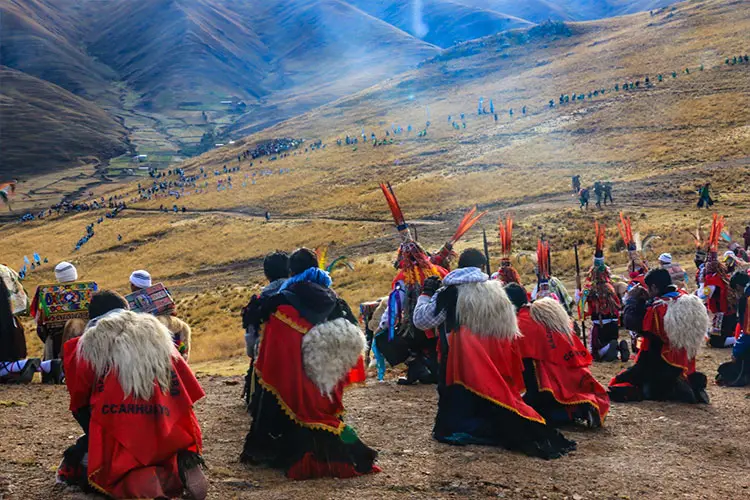
The heart of the Qoyllur Rit’i Peru celebration takes place in the Sinakara Valley, beneath giant towering peaks that dominate the surrounding area. This remote Andean valley in the Ausangate Mountain region, becomes a temporary city of tents during the Qoyllur Rit’i pilgrimage. Thousands upon thousands of people camp here, transforming an otherwise remote mountain basin into a place filled with music, prayer, devotion and activity around the clock. Tents spread across the valley floor while groups gather around small fires to keep warm against the freezing, high altitude Andean nights. The high altitude is impossible to ignore. During the day the sun can feel incredibly intense. Once darkness arrives, temperatures plummet and frost settles across the landscape. Yet nobody seems particularly concerned by the discomfort.
Most pilgrims from Cusco and all over the world, have come here for reasons that go far beyond tourism. Many arrive carrying personal requests. Some come to ask for good health, others for protection, prosperity or guidance. Many return year after year because previous prayers were answered. Entire families maintain traditions of attending the pilgrimage that stretch back generations. It is this continuity that makes Qoyllur Rit’i so fascinating. The pilgrimage remains a living ancestral Andean tradition that continues to play an important role in the lives of thousands of people throughout southern Peru.
Why Qoyllur Rit’i Peru Is One of the Most Important Indigenous Festivals in Peru
The origins of the Qoyllur Rit’i Festival are a blend Catholic beliefs with older Andean spiritual traditions. According to local tradition, a young shepherd boy named Mariano Mayta encountered a mysterious child near the Sinakara Mountain. The friendship between the two boys attracted attention and eventually the mysterious child disappeared, leaving behind a sacred image of Christ on a rock. Even today, that image remains a focal point at the centre of the pilgrimage.
Yet anyone attending the festival quickly realizes that the celebration is about so much more than a single religious story. The APUS or sacred mountains themselves hold enormous significance and importance. Throughout the Andes, mountains have long been viewed as living spiritual beings known as Apus. These sacred mountain spirits are believed to protect local communities and the Apus are the closet to the skies and have complete influence over daily life. The presence of these beliefs remains visible throughout this magnificent Andean pilgrimage Peru.
Catholic processions and Christian symbols exist alongside traditions that are unmistakably Andean in origin. You may think these would conflict with one another. However, they have become uniquely intertwined over centuries. This blending of beliefs is one of the reasons many consider Qoyllur Rit’i to be among the most important indigenous festivals in Peru.
The Dance Groups of the Qoyllur Rit’i Festival
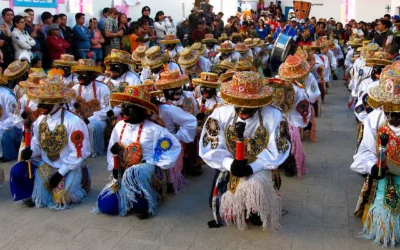
Much like the Virgen del Carmen celebrations in Paucartambo, traditional dance plays a central role in the Qoyllur Rit’i pilgrimage. Throughout the Sinakara valley, different groups perform ancestral dances representing the different communities, regions and traditions from across the Andes.All the dancers arrive wearing elaborate costumes that reflect their community identities and histories. Some outfits are colourful and elegant. Others are deliberately intimidating scary or hilarious….or a combination of the the three. Brass bands and traditional instruments provide a constant soundtrack as performances continue throughout the day and night.
What makes these dances particularly impressive is the mountain setting. Watching dancers perform beneath snow-capped peaks at more than 4,500 metres above sea level creates a completely surreal atmosphere that feels completely different from any other festival in Peru.
The mountains dominate every view, and there is no escaping them. No matter where you stand, they remain present in the background, overlooking this magical event and reminding everyone why this place is considered sacred. The dances for the groups are so much more than a party. It is actually a celebration and offering to the surrounding mountain gods. Plus, the physical effort of the dancers in performing at such a high altitude becomes part of the devotion itself.
The Ukukus and the Sacred Traditions of Qoyllur Rit’i
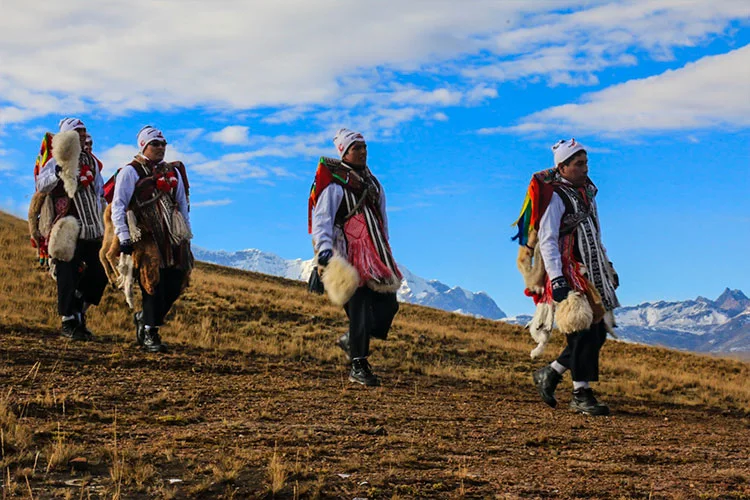
There are many different characters associated with the festival, and none are more important than the Ukukus. Ukukus are recognizable by their dark woollen costumes and knitted face masks. The Ukukus occupy a unique role within the Qoyllur Rit’i Festival. Part guardian, part mediator and part mythical figure, they are deeply respected by pilgrims. Andean tradition states, the Ukuku exists somewhere between the human world and the world of the mountains. Throughout the pilgrimage, they help maintain order and oversee many of the most important rituals. Historically, one of their main responsibilities involved climbing onto the glaciers sitting above the Sinakara Valley. For years, the Ukukus have ascended the mountains during the night and return carrying large blocks of ice from the glacier. These ice blocks were considered sacred and believed to possess incredible healing qualities. Today, due to environmental concerns and the reduction of the glaciers these traditions have had to change. However, this unique relationship between the Ukukus and the surrounding ice caps remains one of the most important elements of the Qoyllur Rit’i Festival. The presence of the Ukukus creates an almost mythical quality to the celebrations at the Qoyllur Rit’i Pilgrimage.
Spend The Night Under the Stars During this Andean Pilgrimage Peru
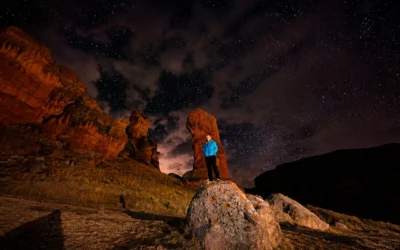
If there is one aspect of Qoyllur Rit’i Peru that is really special, it is when the night falls. As darkness falls across the Sinakara Valley, the whole atmosphere changes completely. The mountains disappear into shadow while thousands of candles and small lights begin to illuminate the valley. Music drifts through the icy night air. Pilgrims come together to pray, sing or simply sit quietly with their family and friends.
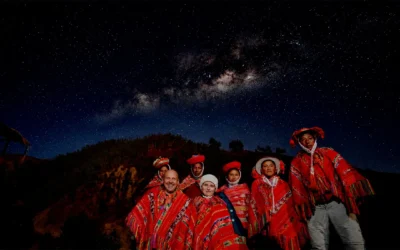
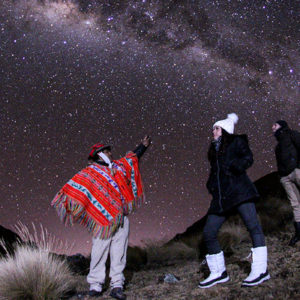
This is when the Andean sky comes alive. The stars are the brightest you have ever seen, due to no light pollution. The Milky Way can be seen stretching across the sky while campfires fill the valley below. This combination of altitude, remoteness and spirituality forms an atmosphere that is difficult to put into words. Even those visitors with no religious connection to the festival often find themselves completely overcome by the experience. Everyone has come to the Qoyllur Rit’i Festival searching for something personal to them. This could be spiritual, personal, magical or just a deeper connection with the traditions of the Andes.
Ausangate Mountain and the Spirituality of the Andes
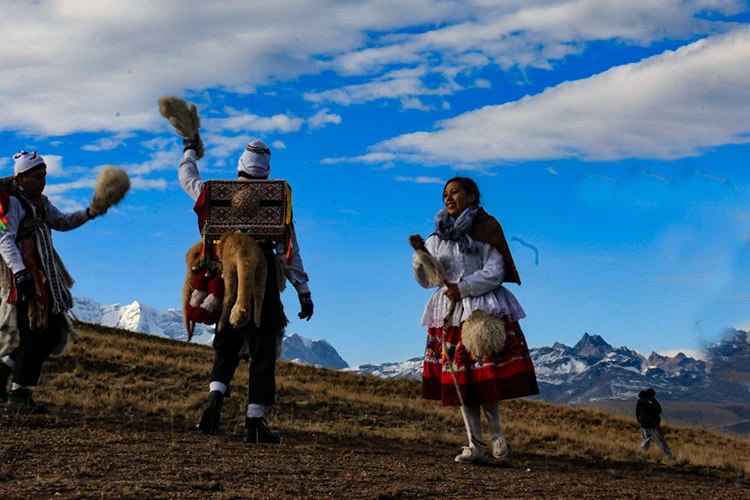
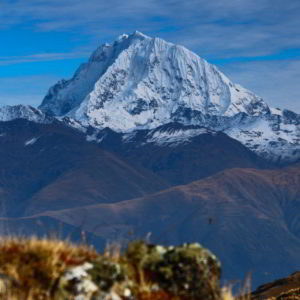
Although the pilgrimage takes place in the Sinakara Valley, the whole region is as equally important. The giant Ausangate mountain is one of the most sacred peaks in Peru and the highest in the Cusco region. The local Quechua communities worship the Ausangate mountain as an “Apu”. This is one of their mountain Gods who is thought to protect these remote local Andean communities.
This unique relationship between the Qoyllur Rit’i festival and the Ausangate mountain represents a wider Andean worldview, where nature, spirituality and everyday life are interconnected in the most wonderful of ways. Rivers, mountains and glaciers are active and ever-present in the lives of local Quechua communities and this is more than evident throughout the Qoyllur Rit’i festival.
Pilgrims will speak about the mountains with awe, respect and even reverence. Offerings are made to the Pachamama and prayers are offered towards Christian figurines as well as the surrounding mountains. If you are not that familiar with Andean spiritual traditions, Qoyllur Rit’i Peru will give you a fascinating insight into a worldview that continues to be a central part of life throughout much of the Peruvian highlands.
Why the Qoyllur Rit’i Festival Remains One of the Most Extraordinary Festivals in Cusco Peru
Eventually the Qoyllur Rit’i pilgrimage comes to an end. The tents start to disappear, and the musicians begin their long journeys home. The Sinakara valley slowly empties and goes back to being the remote mountain valley it is for most of the year.
Yet for those who have attended the Qoyllur Rit’i Festival, the whole experience will remain with them for a long time. A major part of that is due to the setting of this festivity. Few festivals anywhere in the world take place in such a dramatic and remote location. Another part of it comes from the sheer scale of the Qoyllur Rit’i Peru. Seeing thousands of people gathered in an extremely remote Andean valley is something few people will ever forget. Most importantly, however, it is that the authenticity stays with you.
Qoyllur Rit’i still survives because people continue to believe in it. Communities continue to pass ancestral traditions from one generation to the next. Families continue returning every year. The pilgrimage remains woven into the cultural identity of the Andes. In a country famous for archaeological sites and historical archaeological sites, Qoyllur Rit’i stands apart because it is alive. This Andean pilgrimage Peru is a living tradition that continues to thrive while remaining connected to its authenticity and its Andean roots. For travellers interested in culture, spirituality and authentic experiences, it is undoubtedly one of the most remarkable festivals in Cusco Peru and one of the most unforgettable experiences anywhere in South America.
FAQs About the Qoyllur Rit’i Festival Peru
What is the Qoyllur Rit'i Festival?
The Qoyllur Rit’i Festival is one of the most important religious and cultural celebrations in Peru. Combining Catholic beliefs and Andean spiritual traditions, the festival attracts thousands of pilgrims to the Sinakara Valley each year.
Where does the Qoyllur Rit'i pilgrimage take place?
The Qoyllur Rit’i pilgrimage takes place in the Sinakara Valley in the Cusco region of Peru, beneath some of the most spectacular mountain scenery in the Andes.
Why is Qoyllur Rit'i Peru famous?
Qoyllur Rit’i Peru is famous for being one of the largest Andean pilgrimages in Peru. It is known for its spiritual significance, traditional dances, the Ukukus and its extraordinary mountain setting.
Who are the Ukukus at the Qoyllur Rit'i Festival?
The Ukukus are masked figures who play a central role in the Qoyllur Rit’i Festival.
Can visitors attend the Qoyllur Rit'i Festival Peru?
Yes. Visitors are welcome to attend the Qoyllur Rit’i Festival Peru, although the high altitude and basic conditions mean it is best suited to travellers who are comfortable in remote mountain environments.
What is the connection between Qoyllur Rit'i and Ausangate mountain?
Ausangate mountain is one of the most sacred peaks in the Andes and plays an important spiritual role in the beliefs surrounding the Qoyllur Rit’i pilgrimage and Andean traditions more broadly.
Is the Qoyllur Rit'i pilgrimage worth visiting?
Absolutely. For travellers seeking authentic cultural experiences, indigenous festivals in Peru and a deeper understanding of Andean spirituality, Qoyllur Rit’i is one of the most extraordinary events in South America.