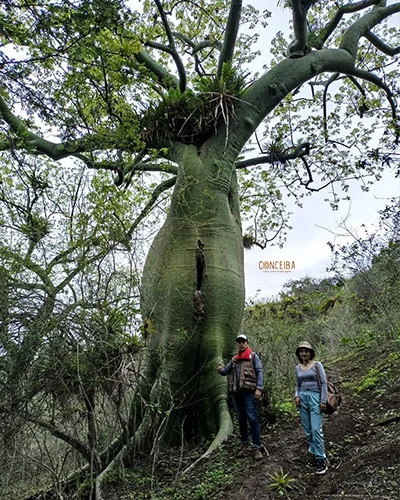
The Ceiba tree, also called kapok tree, is an impressive sight in any South American rainforest. It enormous prickly trunk has a growth rate of 2 to 4 meters per year. The thorns are to protect itself from a number of different kinds of animals. This magnificent tree is one of the forest giants of the tropical rainforest and grows up to 70 meters tall.
There are many Amazon communities in the rainforests of Peru. Here, the giant ceiba tree has been worshipped for a long, long time as a living being
with its own spirit and consciousness. The ceiba tree is considered the tree of life, with its roots reaching down into the underworld. The elders of these rainforest communities speak about the vast rainforests in awe, greatly worshipped in these remote communities. The ancestral belief systems tell us that the ceiba tree only offers its wonderful gifts to those who treat it with humility, gratitude, and respect. This giant of the jungle is powerful. Its enormous roots represent the wisdom of bygone generations, that reconnects communities to their ancestral past. Meanwhile, the dizzy heights of the ceiba tree connecting the earth and the sky. Thus creating a spiritual connection between the human world and the deities.
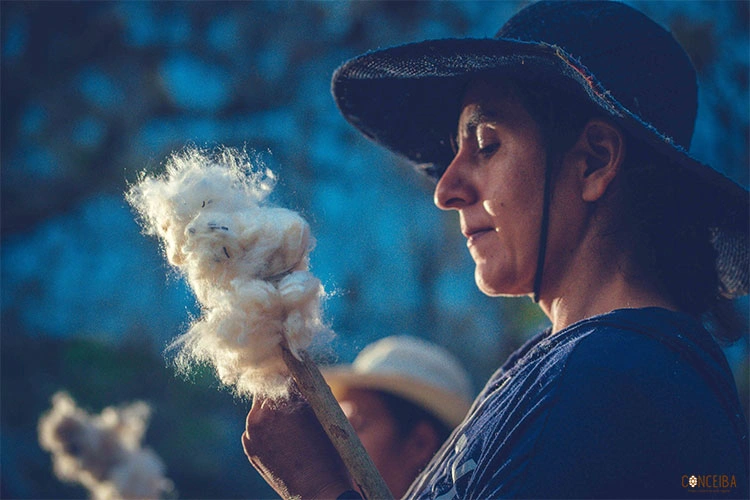
For local families, these beliefs are so much more than folklore created for tourists. They are a real part of everyday life. Children grow up hearing stories about the magical ceiba tree. Grandparents teach the younger generations how to understand the rhythms of the forest and how to recognize the natural cycles that determine when the fiber can be harvested. These lessons are inseparable from ideas of reciprocity and responsibility
Certain tree species provide us shade and there are trees that are even the main food source for families. Then there is the giant ceiba tree! A living spirit woven into the very soul of northern Peru.
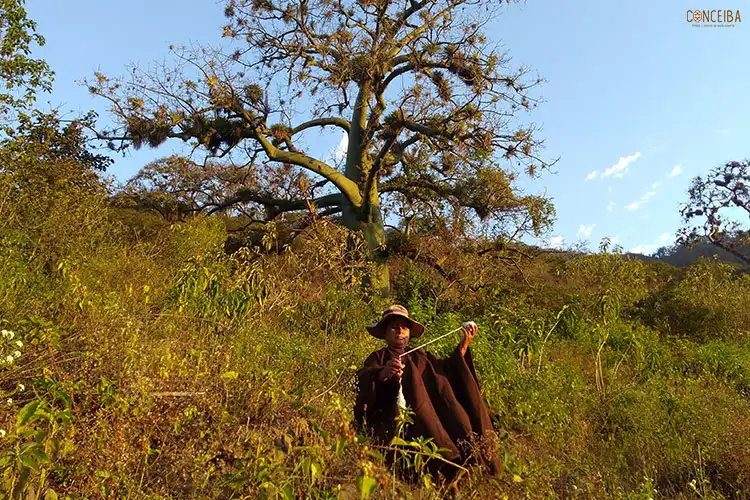
In the dry forests of Peru, communities walk quietly beneath the towering ceiba tree, believing the forest is alive with memories of the generations before them. Elders will tell you the ceiba tree listens. It hears our most real intentions. It knows when someone arrives with gratitude and when they come only to take. It is the kind of wisdom that disappears quickly once communities become disconnected from the land.
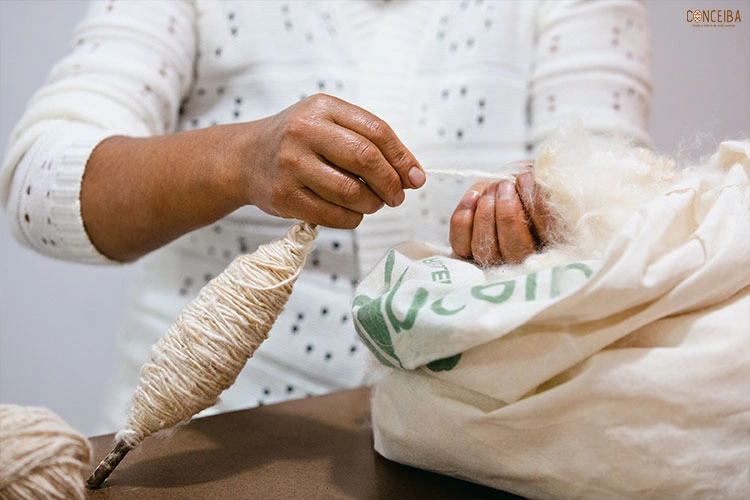
The fibre from this majestic tree feels almost unreal. It is as soft as a cloud and as light as the air. Around the world, people are beginning to discover that this ceiba tree fibre is a sustainable natural fibre and a powerful alternative to synthetic textiles. Some call it “vegan silk” because of its delicate texture and plant-based origins. Other uses include eco-friendly stuffing, biodegradable materials, and a more cruelty-free down alternative.
In Peru, the ceiba tree is a major part of everyday society in remote regions. Inside village homes, artisans transform the fibre with ancestral weaving techniques passed from mother to daughter. Every woven garment is packed with memories, the rhythm of the forest, the patience of the harvest, and the strength of communities protecting their traditions in a very rapidly changing world. To watch these women at work is to understand that their craftsmanship can still be sacred.
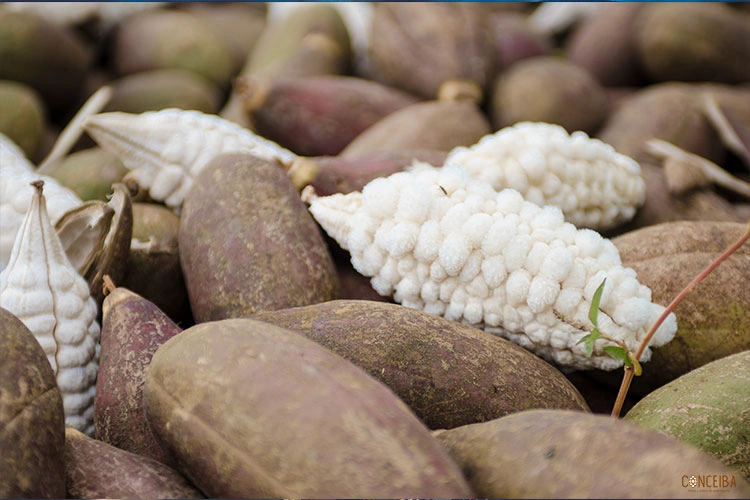
The hands of the weavers move with elegance and create handmade textiles that tell ancient tales that a mere machine could never reproduce. Each thread becomes an intricate connection between the past and the future. A connection between ancient wisdom and a global movement in ethical fashion Peru and a meaningful connection. The perfect women´s empowerment project!
Travelers who visit these regions are often surprised by how deeply the experience affects them, once they have left. These rainforest regions are definitely not loud. Their beauty is subtlety, is profoundly spiritual, and if you travel through too fast, you will almost miss it. This is probably why the ceiba thrives in this part of the world! This giant tree teaches a very different kind of abundance, through balance. It is when you spend time in these rainforests, as you walk beneath the enormous extending branches and hear the silence around you, you begin to understand what exactly what the community members mean. The ceiba tree changes the way people relate to nature. Instead of being something separate from human life, it is something that is deeply connected to it. This is the kind of wisdom that disappears quickly once communities become disconnected from the land.
The Ceiba tree´s motto is “take only what you need”. Listen before speaking. Leave enough for the next generation.
In a world searching desperately for sustainable solutions, the ceiba tree has held the answers all along. This leads us to believe that somewhere in the forests of Peru, the ceiba tree is still listening. Innovation does not always mean inventing something new. Sometimes it means protecting ancient wisdom before it vanishes. The traditions surrounding the ceiba have survived because communities understood something essential long before the rest of the world even know of its existence Nature can never be separated from culture, they are endlessly and forever intertwined!