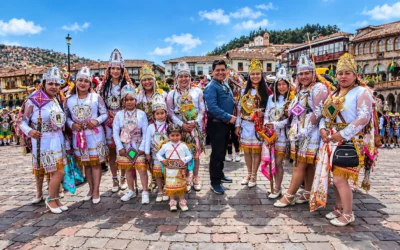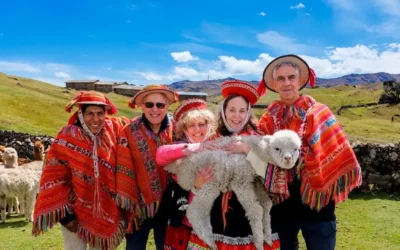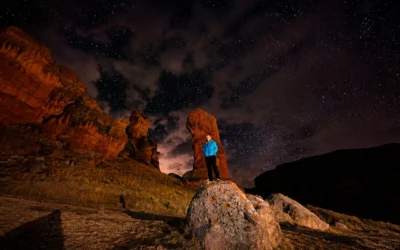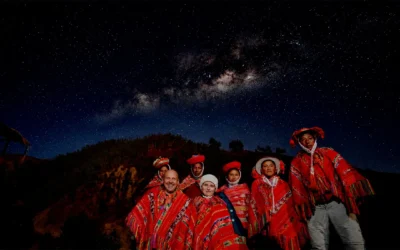
Most visitors to Cusco have never even heard of Q’eswachaka Bridge Peru. That is actually surprising when you think about it because it is one of the few places in Peru where an ancient Inca tradition has never really disappeared. Many archaeological sites offer travellers the experience of stepping back in time. Q’eswachaka is something completely different. We are not talking about a ruin here, nor are we talking about a reconstruction or a museum artefact. This bridge is still used daily and is rebuilt by the local Quechua communities, who have maintained this tradition for centuries.
The first thing that strikes most visitors is how bizarre the bridge looks. It is suspended above the Apurímac River and looks almost too fragile to hold its own weight, never mind support the human beings that use it to cross the river. However, every year, local families gather together to rebuild it entirely by hand using ichu grass harvested from the surrounding mountains. No machinery. No modern materials. Just ancestral knowledge that has been passed from one generation to the next for centuries. What actually makes a visit to Q’eswachaka Bridge so special is not simply the bridge itself, its fascination is the incredible history, Andean culture Peru, and living traditions behind the bridge.
As you drive south from Cusco, you pass through a calmer section of the Andes that many travellers never usually visit. Small villages dot the hillsides, herds of alpacas graze by the roadside, and life continues as normal. This is far removed from the crowds of tourists around Machu Picchu and the Sacred Valley.
When you arrive at Q’eswachaka, about 3 – 4 hours from Cusco, the bridge feels a little like stepping back in time. This is mainly due to the traditions that disappeared everywhere else in the Cusco region but still exist in Q’eswachaka. Here, however, they continue to be part of normal, everyday life. The annual rebuilding of the bridge is not something that is just for tourists. It has been happening for centuries with relatively little tourism, in fact. It happens because the local Quechua communities still consider it vitally important.
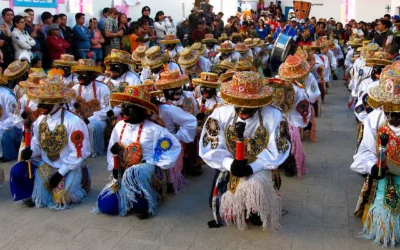
It remains a symbol of the ancient Andean tradition of Ayni, which is one of cooperation between communities, Andean identity, and the connection between human beings, nature, and ancestors. This is probably what makes Q’eswachaka one of the most remarkable historical living traditions in Peru. The annual rebuilding is accompanied by ancestral ceremonies and traditions that represent the spiritual beliefs of the region. Offerings are made to the Pachamama, or Mother Earth, and respect is paid to the Apus, the sacred mountain spirits that are believed to watch over the local Quechua communities. This living tradition is also recognised as part of UNESCO cultural heritage Peru, helping preserve knowledge that has been passed down for generations.
Walking Across the Q’eswachaka Bridge: The Last Inca Rope Bridge
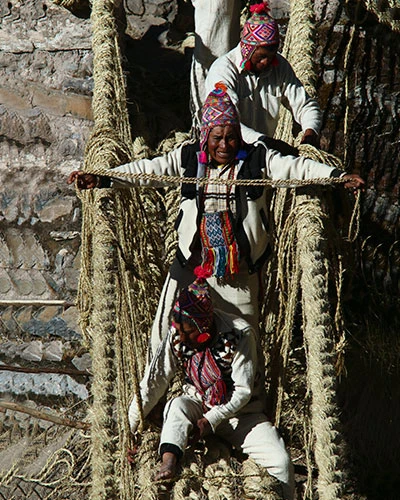
Standing right on the edge of the canyon, the bridge looks worryingly narrow.
The woven grass ropes stretch across the Apurímac River below, suspended between the rocky cliffs on either side of the canyon. This remarkable Inca suspension bridge is certainly not one for vertigo sufferers! From a distance, it almost seems impossible that something constructed entirely by hand can support the weight of people crossing it.Then you take your first step.
The bridge moves gently beneath your feet. The handrails sway slightly as you walk. Below, the river cuts through the canyon, reminding you just how important a crossing point like this would have been centuries ago.
It is no wonder that crossing Q’eswachaka becomes one of the highlights of most people’s Peru tour.
This is not a strenuous, difficult excursion. However, it does create a direct connection to the past and the present day. For a few moments, you are experiencing something very similar to what travellers, messengers, merchants, and local communities would have experienced during the time of the Inca Empire. It is also a reminder of how incredible Inca engineering really was.
The Incas built roads across some of the most challenging terrain on earth. Deep canyons, steep mountains, and fast-flowing rivers were all obstacles that needed solutions. Rope bridges like Q’eswachaka allowed people to move across the Andes long before asphalted roads and bridges existed. When you are standing in the middle of the bridge, looking out across the canyon, it becomes much easier to appreciate the scale of this masterpiece of Inca engineering and the ingenuity that also defined Inca architecture throughout the empire. Mountains, rivers, lakes, and valleys are all filled with deep meaning. The connection between people and their surroundings in Andean life remains visible today in many rural communities throughout the Cusco region.
The Four Lagoons of Canas and Traditional Andean Communities
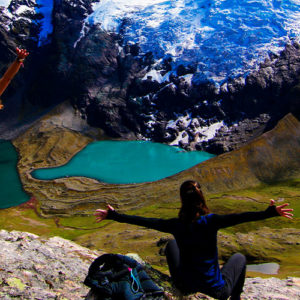
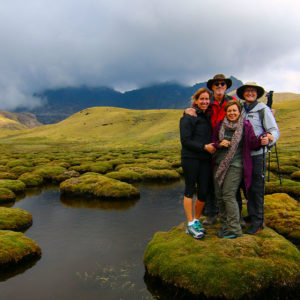
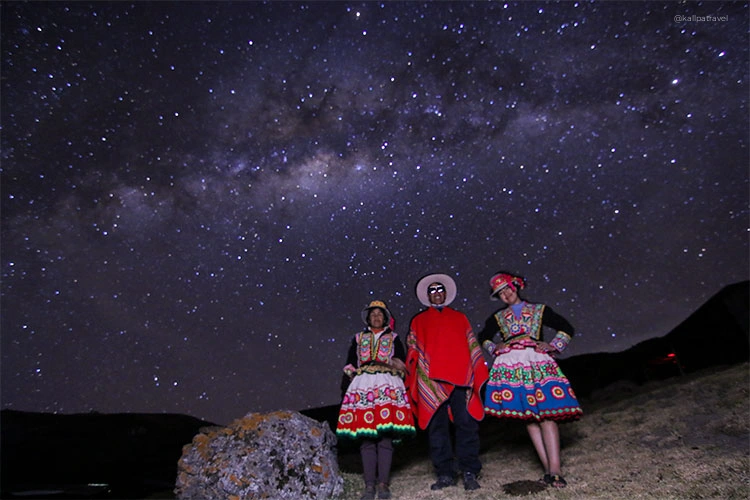 One of the best things about visiting Q’eswachaka is that the bridge is only part of the experience heading south from Cusco. The surrounding region is home to some spectacular Andean scenery that remains relatively unknown compared to Peru’s more famous destinations. Many tours to the bridge include a visit to the Four Lagoons of Canas. These are a series of beautiful high-altitude lakes surrounded by rolling hills, with grazing alpacas and traditional Andean communities. The landscapes here feel wonderfully remote. There are often long stretches of the tour where you see very few other visitors. The scenery is peaceful, open, and distinctly Andean. For photographers, the region offers endless opportunities. Reflections shimmer across the water, mountains rise in the distance, and local wildlife can often be spotted along the shores of the lakes.
Head to a Different Side of Cusco: Q’eswachaka and Cusco Off the Beaten Path
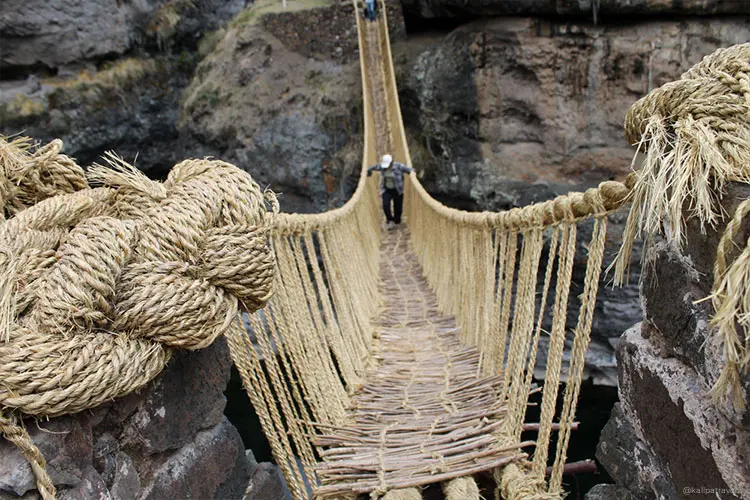
When people think of Cusco, they usually picture Machu Picchu, the Sacred Valley or Rainbow Mountain. There is absolutely nothing wrong with that. These places are famous for very good reason. However, one of the most rewarding aspects of travelling in Peru is discovering the destinations that lie beyond the classic tourist circuits and well-trodden paths. Q’eswachaka is exactly one of those places if you are searching for something more remote and genuinely Cusco off the beaten path.
Tourism in this region remains relatively limited, and local traditions continue to thrive. Customs remain a major part of everyday life. There are no large crowds, no queues, and most certainly no rush to move on to the next destination on the checklist. A Q’eswachaka Bridge tour gives you time to appreciate the magnificent surroundings of the southern Andes, learn about ancestral traditions and local customs, and gain a deeper understanding of the cultural importance of this region. For travellers interested in cultural tours Peru, it offers a very different experience from the more familiar excursions around Cusco and makes for an unforgettable day trip from Cusco.
If you are looking for unique things to do near Cusco, few places offer quite the same combination of history, culture, scenery, and authenticity.
Why Q’eswachaka Bridge Peru Is One of the Best Hidden Gems in Cusco
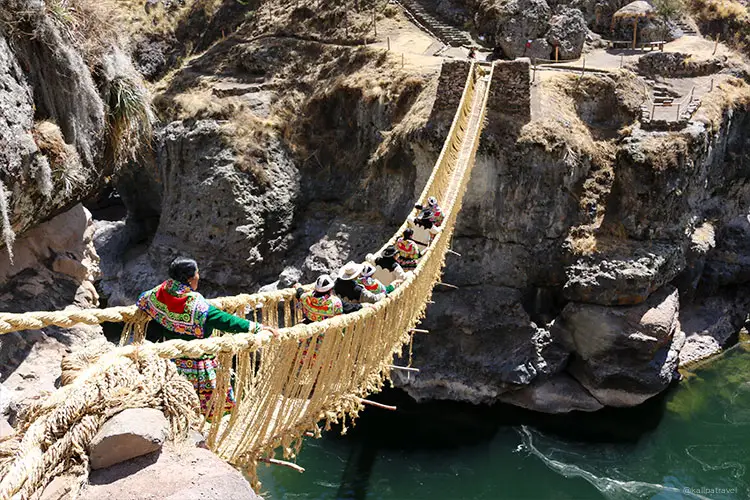
Peru is brimming with some extraordinary places to visit. It is the land of ancient ruins, spectacular mountains, colourful markets, remote trekking routes, and some of the most fascinating cultures in South America. Yet there is something uniquely special about Q’eswachaka. Perhaps it is because the bridge is not just a reminder of the past. It lives, it breathes, and is built on a society that continues today.
Every single strand of grass woven into the bridge represents knowledge passed from one generation to the next. Every annual reconstruction reflects the strength of the communities that continue to maintain it. Every visitor who crosses the bridge gains a small insight into a tradition that has survived against the odds.
In a country filled with archaeological wonders, Q’eswachaka stands apart because it is still alive. And that may be what makes it one of the most remarkable places to visit in Peru. This bridge is so much more than a way to cross a canyon. It is a living reminder that some ancestral traditions survive because communities continue to value them enough to keep them as an integral part of their lives.
For travellers interested in authentic Peru experiences, Andean culture Peru, the ancient Qhapaq Ñan, and discovering genuine hidden gems in Cusco, Q’eswachaka offers something increasingly rare: a chance to experience a living tradition rather than simply observe the past.
FAQs
Where is the Q'eswachaka Bridge located?
The Q’eswachaka Bridge is located in the Quehue District, around four hours south of Cusco. It sits above the Apurímac River in a part of the region that many visitors never reach. Most travellers spend their time between Cusco, the Sacred Valley and Machu Picchu, so heading out towards Canas feels like seeing a completely different side of the Andes. The scenery is spectacular, but what I always notice is how much quieter it is. You leave the tourist trail behind very quickly.
Why is the Q'eswachaka Bridge famous?
Peru has no shortage of impressive Inca sites, but Q’eswachaka is different. It isn’t famous because it is the biggest or most dramatic structure left behind by the Incas. It is famous because it is still alive. Every year local communities rebuild the last Inca rope bridge using techniques that have been passed down through generations. In a country where so much of the Inca legacy survives in stone, Q’eswachaka survives through people.
What is the Q'eswachaka Bridge made from?
The bridge is made entirely from ichu grass, the same tough Andean grass that grows across the highlands. When you first hear that, it sounds almost impossible. Then you stand in front of the bridge and realise just how much knowledge and skill goes into creating something strong enough to span the canyon. It is one of those places that gives you a real appreciation for Inca engineering rather than simply reading about it.
When is the Q'eswachaka Bridge rebuilt?
The bridge is rebuilt every year, usually in June. What I find fascinating is that the rebuilding itself is just as important as the finished bridge. Families from the surrounding communities come together to gather the grass, twist the ropes and construct the new bridge over the Apurímac River. It is a tradition that has survived for centuries and remains an important part of community life today.
Can you walk across the Q'eswachaka Bridge?
Yes, and most people do. The first few steps can feel a little unnerving because the bridge moves beneath your feet and the river is a long way below. After that, most visitors start enjoying it. It is certainly not the sort of bridge crossing you are likely to forget, and it gives you a whole new appreciation for how people travelled across the Andes long before modern roads existed.
Is the Q'eswachaka Bridge a UNESCO World Heritage Site?
The bridge-building tradition has been recognised by UNESCO as Intangible Cultural Heritage of Humanity. That recognition is not really about the bridge alone. It is about the knowledge, skills and community effort that keep the tradition alive. Without the people of the Quehue District, there would be no bridge.
How do I visit the Q'eswachaka Bridge from Cusco?
Most visitors join a Q’eswachaka Bridge tour from Cusco as it is quite a long journey to organise independently. The bridge is usually visited as a day trip from Cusco and many tours include stops at the Four Lagoons of Canas and other viewpoints along the way. It makes for a full day, but one that feels very different from the more familiar excursions around the Sacred Valley.
Is visiting the Q'eswachaka Bridge worth it?
We think it is one of the most rewarding day trips you can take from Cusco, particularly if you are interested in culture rather than simply ticking off famous sights. The bridge itself is impressive, but for me the real story is everything behind it. The communities, the tradition, the connection to the Qhapaq Ñan and the fact that this knowledge has survived for so long. If you are looking for authentic Peru experiences or hoping to discover some of the lesser-known corners of the region, Q’eswachaka is exactly the sort of place that will blow your mind!