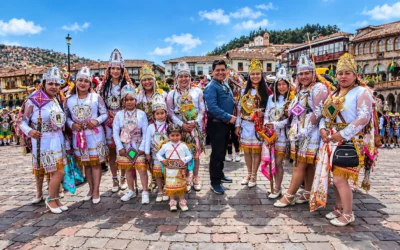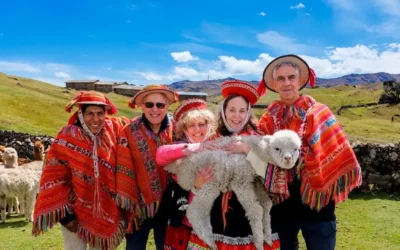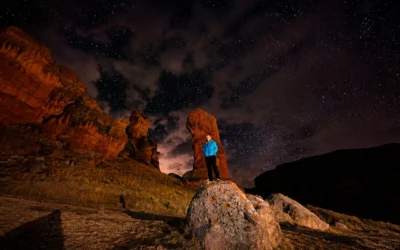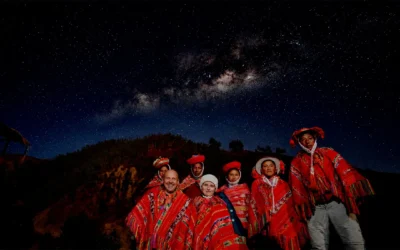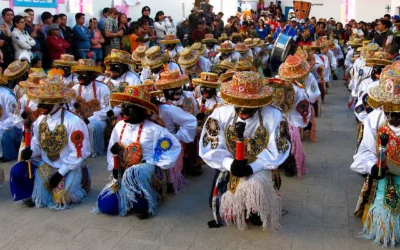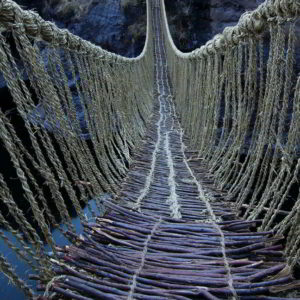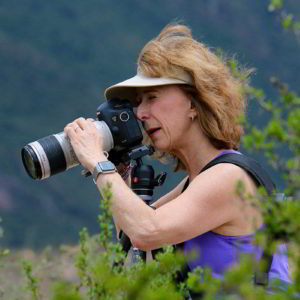
Cusco and Puno change a lot once the sun goes down. It’s not the mountains. It is not the ruins. It’s what happens after the sun goes down. sunset. When the light fades and the sun goes down, is when everything starts to change. All the noise disappears, the valleys turn peaceful, and the sky just opens up like a doorway into a starry world. It actually feels like you’re standing inside a realm full of stars. Looking up at the night sky is nothing short of magical. In Cusco and Puno, the night sky has never just been “the sky”. For the Quechua and Aymara communities, it’s a major part of how life is understood by the local people in these regions. Farming, movement, fable, the different seasons. It’s all there in the night sky, written above you. Astro tourism in these parts of Peru is so much more than looking at the constellations in a technical way. It’s more about learning to see the sky through a different way of thinking and a different mindset. A mindset that has been lived by the local people, not something that was taught. Back in the day, the Incas were the only civilization to define constellations of both the stars and the darkness.
Beyond Machu Picchu
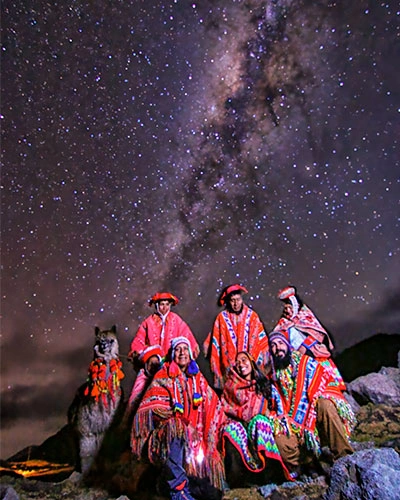
Most people come to travel in Peru with ideas about ancient stone cities and pristine mountain trekking trails. Cusco astronomy tours are usually in second place after these. If you could take a step back in time to the Inca civilization, the world wasn’t only on the earth, below you lot of it was also above you. The sky was an incredibly important part of daily life. It guided the planting cycles for crops, the important ceremonies, even the way time was understood in Inca cosmology.
The Milky Way was so much more than lights in the dark, it was believed to be a flowing river connecting everything in the universe. This way of seeing the world is still maintained today by the Quechua people This is where Indigenous astronomy Peru can be best experienced. This Andean belief system has been shared with the next generation through stories, local customs, and the deep ancestral knowledge in local communities. When you spend time with people in these remote regions, especially visible under the Andean dark sky that still defines this region today. You will realize quite quickly that the sky here isn’t something in the distance it is an integral part of everyday existence.
The Inca inhabited the Andes from the 12th and 15th centuries, building an empire that stretched from present-day Colombia all the way down to Chile. Belief and worship were at the centre of literally everything for the Incas. Their understanding of the world was deeply connected to nature, the land. The sun and moon were central, and temples were built so that light would align with sacred moments like solstices. This is something still echoed in modern interpretations of Cusco night sky experiences. Astronomy was very important for the Inca civilization, mainly due to the relation with the stars to agriculture. Just like the ancient Egyptians, the Incas believed in a horizon-based belief system. They built carefully placed buildings on mountain tops overlooking Cusco. This was so when the sun came up or set spreading light on certain parts of their temples, they knew they needed to plant their seeds.
They recognized their different gods, like Viracocha, the creator; Inti, the sun; and Chuqui Illa, the god of thunder. But their belief system went way beyond that. They also believed in huacas, or the spirits that lived in the natural world itself, in things like rocks, trees, rivers, and waterfalls. Nothing in the landscape was just “there” everything that exists had meaning and formed part of Indigenous knowledge systems Andes. When you spend time in these regions, you will realize quickly that this isn’t just stargazing Peru, it’s something much deeper, closer to mystical travel Peru, where the sky is part of everyday existence.
Cusco and the Inca Constellations
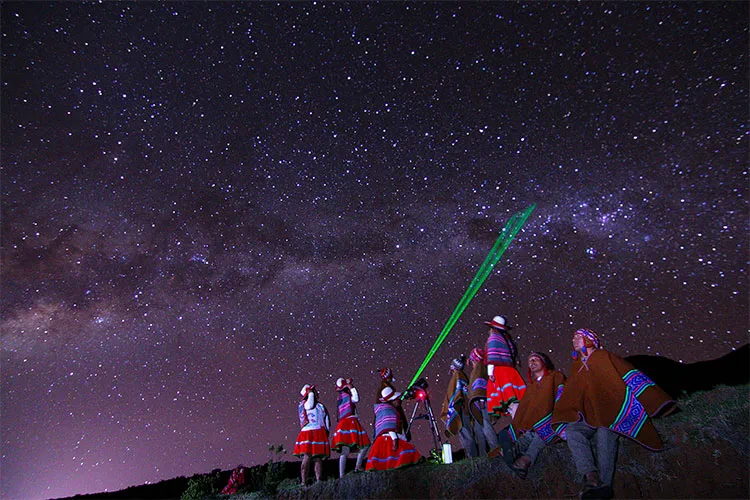
Cusco sits at high elevation, so the sky feels close on a clear night. This is one of the reasons it is so central to Cusco astronomy tours and modern Cusco night sky experiences. The stars look close enough to touch. Even as you walk through the city at night, once the lights soften, you start noticing how much sky there is between the earthen tiled rooftops.
The Inca´s defined animals and other figures that were a part of their day to day lives. They believed that Viracocha had given each animal its own star and that they were protected. These constellations became very important to the Inca´s. This is where Inca night sky beliefs and Andean astronomy traditions come together. The sun and moon were central, and temples were built so that light would align with sacred moments like solstices — something still echoed in modern interpretations of Cusco night sky experiences. This is especially in high altitude environments like high altitude stargazing Peru zones where timing planting cycles mattered. something still referenced in Andean astronomy traditions today
The Inca’s had two groups of constellations. The first group were connected to create figures of animals, their Gods, and other forms. One star cluster called Pleiades was thought to be the caretaker of the animals. Pleiades was not seen as more important than them but shamans would make regular sacrifices to this constellation.
The second type of constellations could only be observed in the absence of stars: These are the dark spots the Milky Way. These darker areas were considered to be living animals and the Milky way was thought to be a river. These dark cloud constellations in the Milky Way form part of what we now understand as the Andean dark sky, and these dark constellations also made up the Inca zodiac.
The Planetarium Cusco (near Sacsayhuaman)
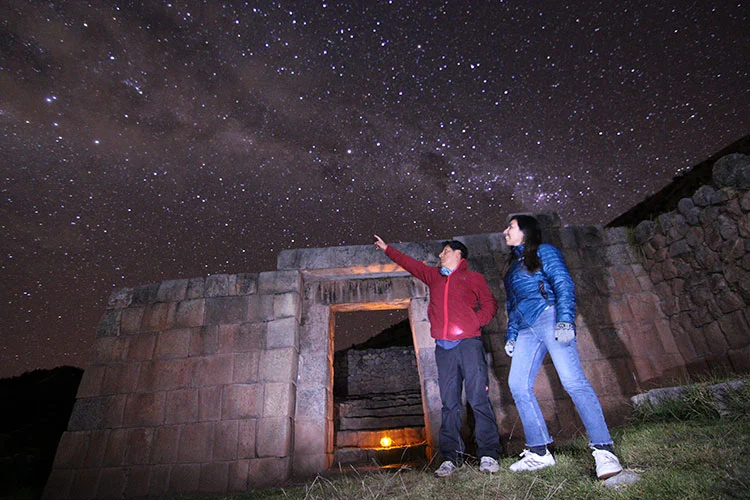
The Cusco Planetarium a family-run planetarium and cultural center found up the road heading to Sacsayhuaman. This is a wonderful place to learn about Inca astronomy and Cusco astronomy tours. Learn how to spot the Llama and other animals in the Cusco night sky. The star gazing experience is unique. One of the most important aspects is the idea of dark cloud constellations. The shapes formed by the dark spaces across the Milky Way. The llama can be observed in the dark areas of the sky running through the Milky Way with its baby. For local Quechua communities, this is part of how the sky is understood in relation to water, animals, and survival. Once you see it, its impossible to go back to seeing the sky as mere “stars” when stargazing Peru. This a main part of what makes Cusco night sky interpretation so unique.
The Stars on the Lares Trek
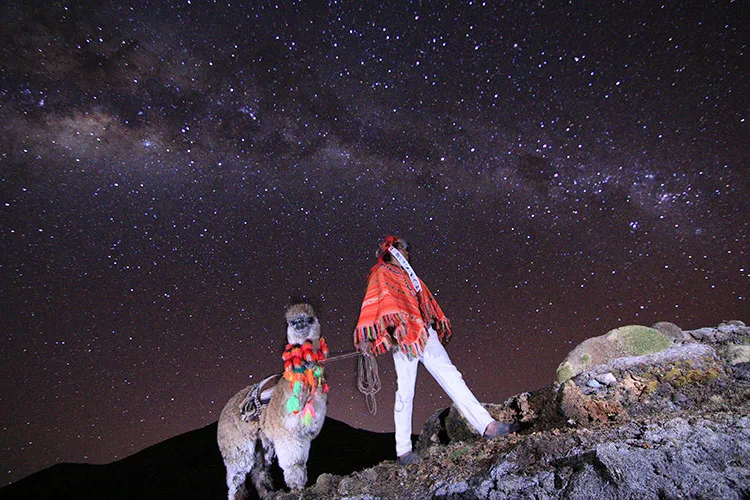
The Lares region offers one of the clearest examples of community-based tourism Peru astronomy, where daily life and sky knowledge are completely connected. The Lares trek has zero light pollution, perfect for stargazing experiences in Cusco. The valley is filled with farming communities where life still follows seasonal rhythms. Planting, harvesting, and weather patterns all influence life and are all interconnected. There is nothing nicer than soaking in the hot springs and observing the night sky at its most pristine best for night sky experiences in the Andes. This is also where Lares communities Peru preserve agricultural cycles tied directly to celestial objects.
Ausangate and the sacred sky
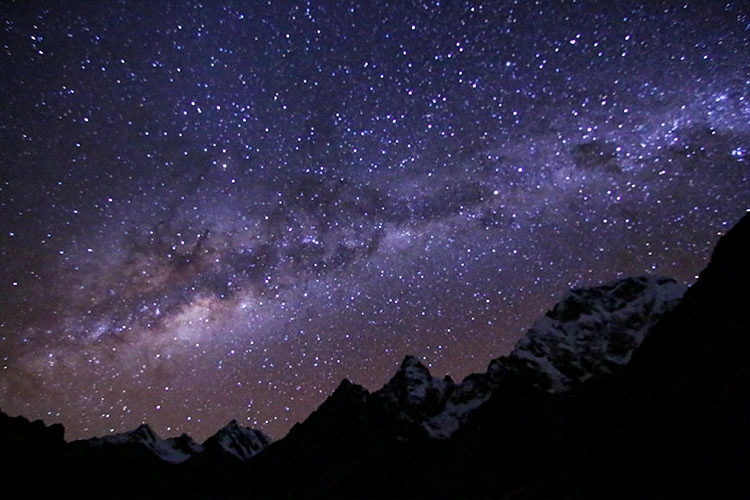
The Ausangate is another excellent region for observing the skies and high- altitude stargazing Peru. It’s remote, exposed, and completely open for Ausangate stargazing. The Ausangate is a region where the weather can shift without warning and the sky feels enormous in every direction. At night, there is literally nothing between you and the stars. No buildings. No noise. Just altitude, wind, and sky. On clear nights you can see Orion’s Belt vividly, with Venus, Jupiter, and other constellations that feel almost too defined to be natural. It’s one of those places where people tend to go quiet without being told to. People prefer to let the stars do the talking. Ausangate is excellent for viewing Milky Way Andes Peru. It is a key area for understanding the Andean worldview sky and land connection, where the landscape and sky are inseparable.
Puno – Where the sky meets the lake
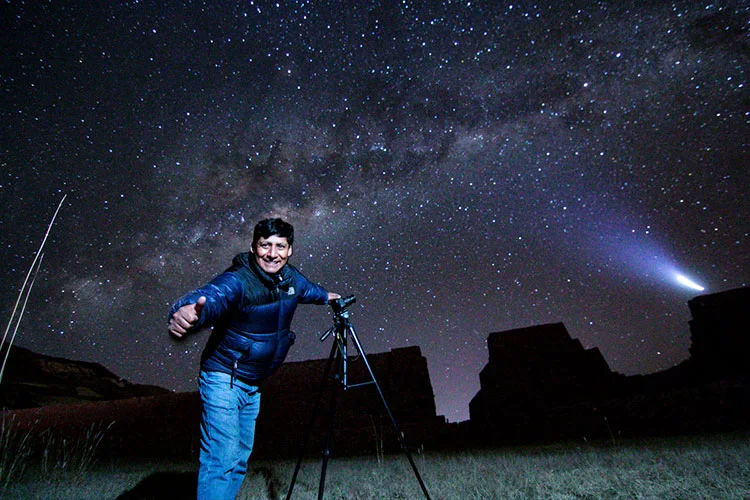
The skies over Puno are different again and Puno astrotourism lives and breathes. Found at over 3,800 metres, the air is thin and life is still. Once you head out onto Lake Titicaca at night, the world becomes so much more simplistic. Simply you, the water, sky, and silence. There is very little light pollution. Stars reflect on the surface of the lake like a mirror and it actually becomes hard to tell where the sky ends and the water begins. The Aymara and Quechua communities who reside around the lake, worship the stars and they are connected to their folklore and the origin of their existence mixed with the cycles of life, and how time is understood in these communities. This forms part of Indigenous astronomy Peru
Amantaní and Taquile islands
Sone of the best things to do on Titicaca Lake is to stay with a local family’s on Amantaní or Taquile Island and one of the best night sky experiences in the Andes. Life on the islands slows right down. Everything follows the rhythm of the lake and the land and of course the skies. This is community-based tourism Peru astronomy at its best.
People wake early, work on their land, and rest when it gets dark. It sounds simple, but when you are actually there, you will realize how much modern travel has pulled us away from that kind of natural rhythm. When night falls, some families take visitors up to ceremonial temples like Pachatata and Pachamama for excellent Lake Titicaca stargazing of the night skies. The sky feels wide in a way that’s hard to explain properly, because it’s completely uninterrupted to learn about Inca cosmology.
Capachica Peninsula and Aymara knowledge
On the Capachica Peninsula, especially in villages like Llachón, tourism is very community-based and wonderfully local with Aymara knowledge systems Andes. There is no separation between “experience” and “daily life” in the way people often expect. It all combines seamlessly. This is also part of eco cultural travel Peru, where tourism is fully integrated into community life. The Aymara knowledge of the sky here is still directly linked to fishing cycles and understanding the magnificent lake itself. This is what defines experiential tourism Peru. Changes in constellations, along with seasonal shifts, and weather patterns are all part of the way of life here. Evenings are generally simple. Like walking, sitting together, sometimes music, sometimes firelight conversations. This is when everyday topics and the older ways of understanding the world come together for mystical travel Peru.
How to approach astrotourism in Cusco and Puno
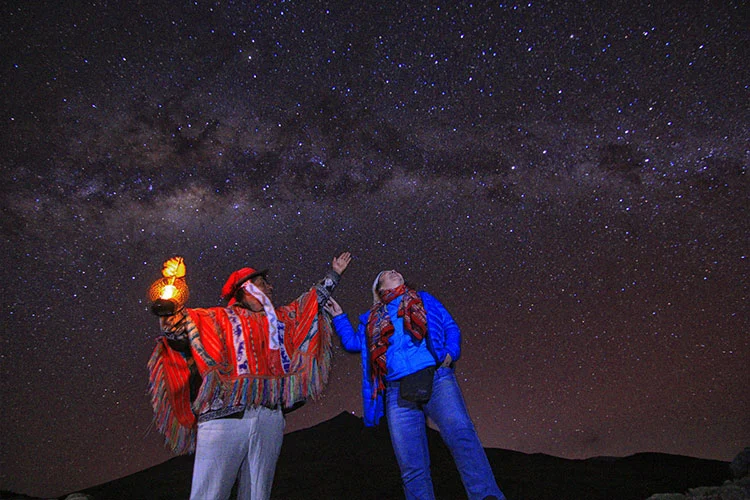
The Best season is from May to October which is dry season, for the clearest skies and most consistent weather conditions. Cold temperatures are ever present, especially in Puno and on the islands. Once the sun goes down, so do the temperatures and temperatures are generally around the freezing point.
Altitude takes time
Puno in particular needs a slower start. A couple of quiet days helps more than people expect.
Don’t treat it like an activity. This isn’t something to complete. It works better when you slow down and just go with it.
What makes astrotourism in Cusco and Puno different has nothing to do with visibility or altitude. It’s more to do with the way the sky is still a massive part of life here. When you experience the region like this, something shifts completely. The night sky stops being something you look at and defines your place in the universe forever. starts feeling like you are connected to everything else around you.
FAQs
What is astrotourism in Cusco and Puno?
This is stargazing combined with local knowledge. You will be learning how the local Quechua and Aymara communities read and understand the night sky.
When is the best time to go?
May to October for the clearest skies.
Do I need astronomy knowledge?
No. It’s explained through stories, observation, and local interpretation.
Is altitude difficult in Puno?
It can be. It’s high altitude, so it’s best to take it slow for the first couple of days.
What makes the Andes sky special?
Altitude, dry air, very low light pollution — and the cultural way the sky is understood.
Is this more cultural or scientific?
It’s both, but it leans more towards cultural understanding rooted in lived experience.